“My skin is sliding off my face” (And other things we whisper to the mirror)
Let’s be honest. You’re busy. You’re juggling work, kids, aging parents, and a to-do list that never ends. You spend your life putting everyone else first, so when you catch your reflection in a shop window and realize your jawline has decided to relocate south, you might feel the following.
1. Shock: “When did that happen? Who is that tired woman, and what has she done with me?”
2. Guilt: “I shouldn’t care about this. It’s vain. I have bigger things to worry about than a bit of sagging.”
First off: Stop that. It isn’t vain to want to look as energetic as you feel (or used to feel before life caught up with you).
Let’s take a look at what is going on….
The "Tent and the Poles" (Or: Why everything is pooling at the bottom)
I tell my patients that aging is like a high-quality bell tent.
• The Poles: Your bones and those lovely deep fat pads that give you structure.
• The Canvas: Your skin.
In our 20s and 30s, the poles are strong and tall. The canvas is pulled taut and smooth. But as we hit perimenopause and menopause, the "poles" start to shorten. Bone reabsorbs, and those fat pads shrink.
Suddenly, you have the same amount of canvas (skin), but the poles aren't tall enough to hold it up anymore. The canvas begins to sag, ripple, and pool at the bottom. It gets damaged by the sun and elements and loses its strength and integrity and starts to thin and crease.
You get the picture right? So where does Sculptra fit in?
You’ve heard of dermal fillers. They’re great for "plugging the gaps," if used strategically and carefully to replace structure and volume but aren’t the answer for everyone. ." You want to look like you, just... less like you’ve been awake for three days straight.”
This is why I’ve introduced Sculptra. It’s a biostimulator. It doesn't just sit there; it nudges your skin to start making its own collagen again. It’s a slow-burner, rebuilding the height of your "poles" from the inside out.
Why now? I’ll be straight with you: years ago, I wasn't convinced the safety was where it needed to be. I’m a "safety-first" practitioner, not a "trend-first" one. Now, the science is tried and tested,the formula is better, and I have the experience to give you that natural, discreet result.
No Pressure
You won’t find a cold waiting room or any expectation that you look a certain way before you walk in.My clinic is my safe space . It’s a private, judgment-free zone where we have the time to actually talk.
We’ll handle the "disappearing act" together—that awkward week after treatment where the water is absorbed and you think, "Wait, did it work?" (Spoiler: Yes, it's just getting started). I’ll even show you how to do your "5-5-5" massage so it feels like five minutes of peace, not a medical chore.
The Bottom Line:
You aren't "aging badly." Your "tent poles" just need a little structural support.
Retinol Benefits for Mature Skin
Discover safe, natural benefits of retinol for mature skin – no jargon, just honest advice for glowing, healthier skin. Explore peri-menopause and post-menopause skincare solutions for sagging, wrinkles, pigmentation, and dryness.
If You’ve Visited Fairy Fixes, You’ll Know I Ask About Retinol
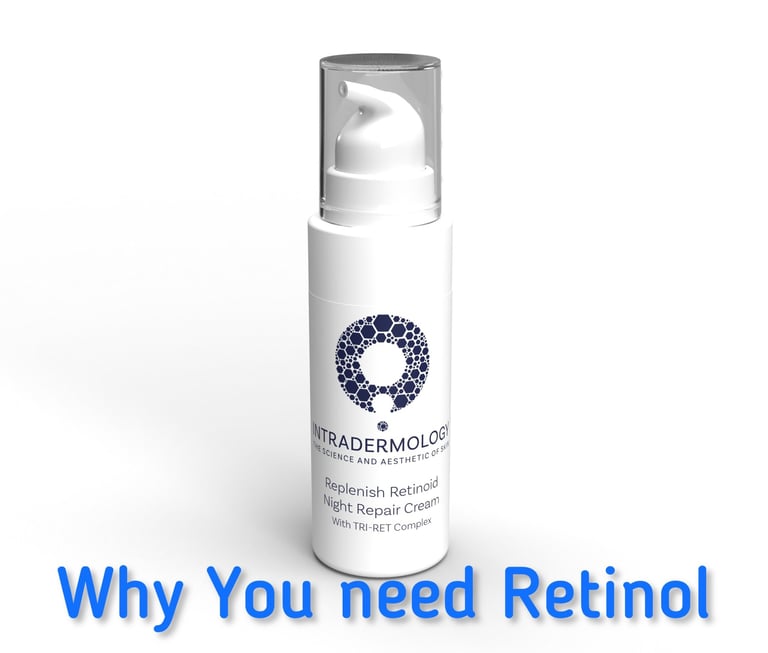
If you’re dealing with peri or post-menopause skin changes like sagging, wrinkles, or dullness, a night retinoid product should be an essential part of your routine. Used properly, good quality retinol can transform your skin with minimal irritation.
What Is Retinol?
Retinol is a form of vitamin A studied for decades to support healthy skin. If you’re in your late 30s to 60s, noticing sagging, fine lines, or loss of plumpness – it could be a straightforward way to help you feel like yourself again. You don’t need hype or complexity; just something that works safely for your skin.
The Benefits Retinol Brings
As we age, collagen slows, oil levels drop, and sun damage shows. Retinol addresses these issues head-on:
1. Fights Sagging Skin: Boosts collagen and elastin to firm skin and restore subtle volume – helpful even for those experiencing "Ozempic Face" from GLP1 medications. Won’t fix major loss (needing fillers or surgery) but improves texture and tone.
2. Softens Wrinkles: Speeds up cell turnover to smooth lines around eyes, mouth, and forehead – skin looks rested, not altered.
3. Fades Pigmentation: Breaks down excess pigment to even tone and brighten skin, addressing sun damage from our youth.
4. Improves Texture: Clears pores and sloughs off dead cells for smooth, refined skin – no harsh scrubs needed.
5. Boosts Hydration: Strengthens the skin’s barrier to retain moisture, easing dryness and crepiness.
6. Calms Sensitivities: When guided by a professional, it can reduce inflammation and redness from rosacea.
Medical Grade vs Over-the-Counter Retinol
It can be confusing to choose – here’s the breakdown:
OTC Retinol
• Lower concentrations
• Easy to buy without consultation; often more affordable (though not always)
• Quality varies widely; may cause irritation if not paired with moisturiser and sunscreen. Less effective for significant concerns like deep wrinkles or stubborn pigmentation.
Medical-Grade/Prescription Retinol
• Higher strength, including tretinoin (active vitamin A that works faster)
• Targets advanced changes like noticeable sagging, persistent pigmentation, or unresponsive rosacea
• Only available through a trained professional who assesses your skin and health
• More potent but tailored to you, minimising irritation. Costs more upfront but avoids guesswork.
Safe Retinol Use: Key Guidelines
• Start slow: Use at night a couple of times a week, building up gradually (skin repairs best during sleep)
• Always use sunscreen: Retinol increases sun sensitivity – high-SPF broad-spectrum protection is essential
• Avoid if pregnant/breastfeeding: Talk to your doctor first
• Get professional advice: Your skin’s needs are unique – a trusted clinic can help you choose the right product
Ready to Find Out If Retinol Is Right for You?
Book a free, no-obligation consultation at Fairy Fixes to discuss your skin concerns and goals.